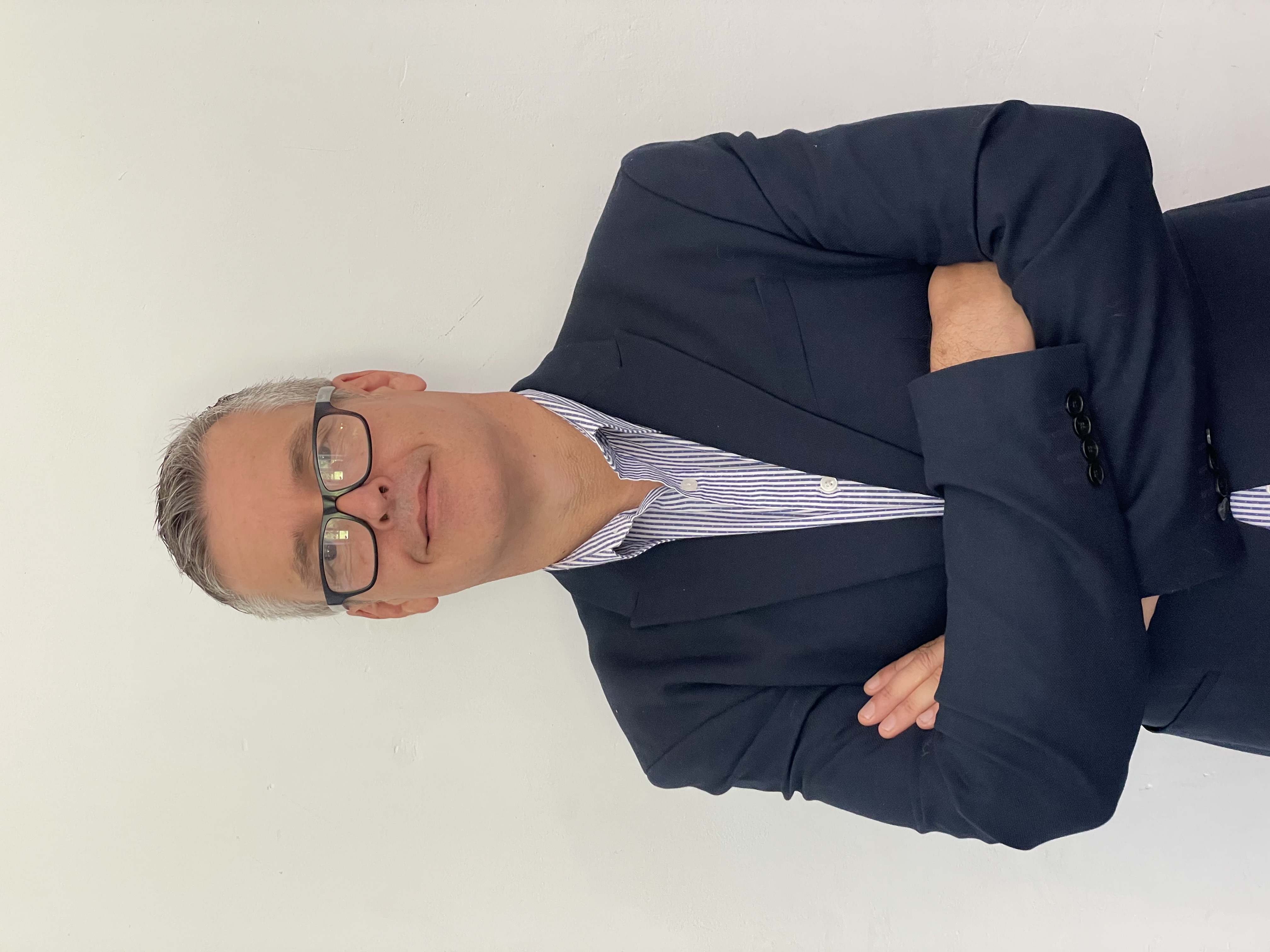
From Warships To Quantum
When people ask where I’m from, I usually tell them: engineering and hustle. It isn’t a slogan; it’s the truth.
I grew up working-class and broke, in a house where university was a fantasy and the only stable career was leaving. I loved machines and my dog-eared big book of pirates, which ignited the promise of freedom, danger, and far horizons. The pirates weren’t hiring, so at sixteen I signed a boys’ service contract with the Royal Navy. A few days after my sixteenth birthday, I walked through the gates of HMS Raleigh in Cornwall, uniform too big, shoes too tight, heart in terror, set to secure a masters in boot polishing and extreme ironing.

Hello Sailor!
I wasn’t born for obedience. The Navy taught me discipline, but it also taught me how little I liked being told what to do. What I did have was curiosity, a restless mind that wanted to know how things worked, not merely that they worked.
I trained as a marine engineer, earned an HND in electrical engineering, and soon found myself crawling through the steel intestines of warships: propulsion systems, radar and weapons control.
There’s a smell to ships that never leaves you, the overwhelming smell of diesel, hot oil, metal polish, and sweat. Most days were maintenance and monotony.
In year two, I was attached to a Royal Marines ship unit as an engineering specialist, the poor bastard who ran behind the commandos with a toolkit, spare radio batteries, and a rifle. Iraq. East Africa. We slept in bug-infested mud, fixed what broke, and l learned that engineers fight entropy, not enemies, at least not most of the time.
I loved the camaraderie and the engineering. The “soldiering,” less so. Pooping into plastic bags while hiding in observation posts for weeks on end strips the romance from service life. The guns were cool, though.
Panic Is Optional
Four years in, during a nighttime “middle watch”. A sea valve failed. The loud bang of the rupture, the peppering of filth, the sudden darkness as the electrics ingested sea water and battery lights flickered. Water poured in, cold and heavy. Training took over. You don’t think; you move. I remember the weight of the water, fumbling with wooden wedges, trying to stem the flood. Nobody died. Afterwards, sitting on the hatch, body trembling in trauma, I realised something I’ve never forgotten: panic is optional.
I was medically discharged soon after. Freedom arrived in a brown envelope. I walked away with good stories, an HND with little practical application outside of the military, and the strange calm of someone who’d already rehearsed death multiple times before the age of twenty two.
Cars, Cash & the Crash
Civvy street felt silent after years of travel and adventure; I swapped engines for networks, gun-loaders for code
I went where logic still ruled: defence and telecoms. I worked on causal-analysis systems, the software that tells you why things fail. I started as a product manager, worked up through pre-sales and sales, and discovered I liked the business of engineering more than engineering itself. Building trust, translating complexity, turning circuitry into meaning.
We did well. Several startups I joined were swallowed by the big firms. I was acquired by EMC twice and left twice, choosing uncertainty over salary. I realised I liked the chaos of startups, the part where you have to invent the structure. Success and a consistent flow of six and seven figure deals gave me confidence, a hell of a lot of cash and some nice cars.
I was surrounded by brilliant and experienced executives, I discovered that selling was about aligning and building consensus towards a shared goal. But I still disliked being ordered around and seeing my brilliant colleagues being cut based on spreadsheets without understanding or human conversation.
Watching good people disappear into mergers and spreadsheets, I wanted a company that valued logic and loyalty in equal measure.
So I started my own company.
Startups, Implosions, and Lessons in Pain
Of course I failed spectacularly.
My first data company imploded faster than you can say Series A. At the time, it felt apocalyptic; in hindsight it was an accelerated MBA in checking my ego, naivety, and human nature.
The second company scraped a modest exit. It didn’t make anyone rich, but it bought me time- the only real luxury an entrepreneur ever earns.
After years of being asked irrelevant questions about databases and hundreds of long-haul flights, I wanted something human, tangible, chaotic again. So I did the logical thing for a burned-out tech founder: I opened a hostel.
Mad Monkey Business
Mad Monkey began as a half-reckless experiment in Southeast Asia, a place for travellers that gave something back to the local communities. Within a few years, one hostel became twenty across seven countries, with nearly nine hundred staff I had found a bigger purpose.
For the first years, I was founder by day, bar manager by night, sometimes both in the same hour. The early accounts were kept on beer-stained notebooks. I ran on equal parts rum and hard work, like some sort of alcoholic batman.
When our first child arrived, I needed money. By day I helped set up Cambodia’s national Credit Bureau; by night I ran pub crawls, mediated drunken disputes and ran the bar. It was absurd, exhausting, and formative - a kind of entrepreneurial boot camp in human unpredictability.
I learned that leadership isn’t all charisma; it’s endurance in the face of adversity, the same lesson the Navy had taught me in a different uniform. Still leadership was incredibly difficult, I made many mistakes, but over time I improved. [ Goodbye Video ]
Then came COVID. Overnight, our hostels emptied. Recapitalising the business helped us survive but at a deep cost, the company I’d built no longer felt mine and I wasn’t happy. We saved hundreds of jobs, that mattered, but when it was over, I was hollowed out. I stepped down in 2024, satisfied but done. Freedom found me again. This time, in a brown envelope of my own making.
Bar Tabs to Bibliographies
I’d built and lost enough to recognise the same pattern in myself, curiosity disguised as chaos. Burnout leaves a peculiar silence. To fill it, I went back to study, venture finance at Oxford, digital strategy at Yale, and a year-long MBA in Rome.
I took defence-communications contract work to pay the bills and studied at night. Somewhere between case studies and spreadsheets, I rediscovered an old obsession: quantum physics.
Quantum had always fascinated me - absurd, poetic, contradictory. I used to fall asleep over Hrabovsky and Susskind, half hypnotised, but mostly confused. At fifty, I decided to do something beautifully irrational again: find work in quantum technology.
Crickets & Quantum
I thought my record, defence, telecoms, startups, seven-figure deal wins and international experience would open doors. It didn’t. Recruiters saw no physics PhD, too much sales, too much age, especially too much age. One CSO from a French quantum simulator firm even laughed in my face, the brittle arrogance of*, ” I am a brilliant physicist and you are not worthy and don’t belong here type of laugh.”*
I called recruiters, sent CVs, I received silence, crickets, tumbleweeds for replies.
It stung. But rejection clarifies.
Quantum didn’t just need more people who could write equations; it needed people who could translate them, connect research to revenue, theory to relevance. So I stopped applying and started learning.
Over three months I interviewed more than a hundred quantum experts across computing, cryptography, and photonics. I paid for the sessions myself, part education, part obsession. What emerged was a pattern: brilliant science, terrible storytelling confused with technical bum-fluff that had little or no business relevance.
I started building,again. Company number four - this time in Quantum.
Entropy & Everything Else
At a European Defence Fund event, I met three people who would change everything, Anna, Michal, and Maciej, each brilliant, each frustrated by the same disconnect between research and reality. Together we founded Quantum Security Defence, a bridge between deep-tech research and practical application. Anna Beata Kalisz Hedegaard and I ran the firm with Michal, and Maciej to support.
We started small, weekly expert sessions bringing together researchers, policymakers, and commercial teams who rarely spoke to each other. The conversations grew; the community formed. Within a year we had paying members, strategic partners, and our first billion dollar-company clients, all bootstrapped, all powered by collaboration.
Lessons Along The Way
If the Navy taught me not to panic, and Mad Monkey taught me how to build order from chaos, Quantum taught me reverence for complexity, that quiet respect for the scale of what you don’t yet understand.
You don’t compete with brilliance; you collaborate with it. You don’t need a PhD to lead in quantum, though it helps. You need curiosity, patience, and the ability to make difficult ideas human.
Age doesn’t disqualify you. Bias does. Community beats credentials every time. And excitement, expressed with humility, will always outlast hype.
I’ve learned that the smartest move is to stand beside people whose minds work in directions mine never will. You learn more from proximity to brilliance than from any pride in your own capability.
Quantum, like every frontier, isn’t just about technology, it’s about translation. Turning equations into meaning. Turning wonder into utility.
Quantum Horizons
Now, as Quantum Security Defence enters its second year, the mission is clear: make quantum security understandable, investable, and accessible, a bridge between science and state, innovation and impact, tech and the triple bottom line.
I still think about that flooding compartment on HMS Westminster: the sudden dark, the cold water rising, the feeling that everything solid can vanish in seconds. Systems fail. People falter. But if you stay calm and keep moving, you survive.
Because in every system, mechanical, digital, or quantum, survival often belongs to those who stay curious and robust even after the lights go out unexpectedly.
Thank You For Reading…
As the vehicle that my consciousness is riding around in turns 52 in a couple of weeks, this post has served the purpose of a Sunday cathartic self reckoning. After a year of building, rebuilding, and learning harder than ever before, I needed to take a breath and take stock.
It’s certainly not a victory lap, more of a gear check before the next hill.
If you are a smart founder, brilliant scientist or even if you struggling to get ahead, don’t let the bastards grind you down, just keep going, consistency counts and persistence beats resistance.
Thank you. Sincerely.
I wish you an awesome Sunday afternoon.